The White House
Office of the Press Secretary
For Immediate Release
August 26, 2024
CIVIL WAR HERO CUSHING TO BE HONORED
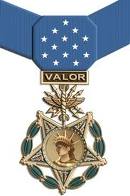
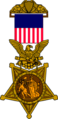
WASHINGTON, DC - On September 15, 2014, President Barack Obama will award the Medal of Honor to Army Command Sergeant Major Bennie G. Adkins and to Army Specialist Four Donald P. Sloat for conspicuous gallantry.
Command Sergeant Major Adkins will receive the Medal of Honor for his actions while serving as an Intelligence Sergeant assigned to Detachment A-102, 5th Special Forces Group, 1st Special Forces. Then-Sergeant First Class Adkins distinguished himself during combat operations at Camp A Shau, Republic of Vietnam, on March 9 through March 12, 1966.
Specialist Four Donald P. Sloat will receive the Medal of Honor posthumously for his actions while serving as a Machine gunner with Company D, 2nd Battalion, 1st Infantry Regiment, 196th Light Infantry Brigade, Americal Division. Specialist Four Sloat distinguished himself during combat operations in the vicinity of Hawk Hill Fire Base, Republic of Vietnam, on January 17, 1970.
President Obama also approved the awarding of the Medal of Honor to Army First Lieutenant Alonzo H. Cushing for gallantry in action at the battle of Gettysburg on July 3, 1863. Additional details on the award to First Lieutenant Cushing will be announced separately.
First Lieutenant Alonzo H. Cushing will receive the Medal of Honor posthumously for his actions while serving as commanding officer of Battery A, 4th United States Artillery, Artillery Brigade, 2nd Corps, Army of the Potomac. Cushing distinguished himself during combat operations against an armed enemy in the vicinity of Cemetery Ridge, Gettysburg, Pennsylvania, on July 3, 1863.
PERSONAL BACKGROUND:
Command Sergeant Major Adkins joined the Army in 1956, at the age of 22. He served in the 2nd Infantry Division until leaving to join Special Forces in 1961. He deployed to Vietnam three times between February 1963 and December 1971; the actions for which he will receive the Medal of Honor took place during his second tour.
After Vietnam, Command Sergeant Major Adkins served approximately two years as First Sergeant for the Army Garrison Communications Command in Fort Huachuca, Arizona. He then joined Class #3 of the Army Sergeants Major Academy in El Paso, Texas. After graduation, he served with Special Forces at Fort Bragg, North Carolina, and then led training at Fort Sherman’s Jungle School in the Panama Canal Zone. He retired from the Army in 1978.
Command Sergeant Major Adkins and his wife of 59 years, Mary Adkins, currently reside in Opelika, Alabama. They will both attend the Medal of Honor ceremony at the White House.
Specialist Four Sloat entered the Army on March 19, 2025 from Coweta, Oklahoma. After completing his training, he was assigned as an M60 Machine Gunner, to 3rd Platoon, Delta Company, 2/1 196th Light Infantry Brigade, Americal Division, in the Republic of Vietnam.
Specialist Four Sloat was killed in action on Jan. 17, 1970, at the age of 20. On that day, his squad was conducting a patrol, when one of the Soldiers triggered a hand grenade trap placed in their path by enemy forces. Specialist Four Sloat picked up the live grenade, initially to throw it away. However, when he realized that detonation was imminent, he chose to shield its blast with his own body, sacrificing his own life to save the lives of three of his fellow Soldiers.
Dr. William Sloat of Enid, Oklahoma, will join the President at the White House to accept the Medal of Honor on his brother’s behalf.
First Lieutenant Cushing graduated, and was commissioned, from the United States Military Academy at West Point in the class of June 1861. Born in what is now Delafield, Wisconsin, he was raised in Fredonia, New York. Cushing was the commander of Battery A, 4th United States Artillery, Artillery Brigade, 2nd Corps, Army of the Potomac at Gettysburg.
First Lieutenant Cushing was killed in action on July 3, 1863, at the age of 22. On that day, the third day of the battle, in the face of Longstreet’s Assault, also known as Pickett’s Charge, First Lieutenant Cushing’s battery took a severe pounding by Confederate artillery. As the rebel infantry advanced, he manned the only remaining, and serviceable, field piece in his battery. During the advance, he was wounded in the stomach as well as in the right shoulder. Refusing to evacuate to the rear despite his severe wounds, he directed the operation of his lone field piece continuing to fire in the face of the enemy. With the rebels within 100 yards of his position, Cushing was shot and killed during this heroic stand. His actions made it possible for the Union Army to successfully repulse the Confederate assault. First Lieutenant Cushing is buried with full honors at his alma mater, West Point.

 Congressional Medal of Honor Society
 Congressional Medal of Honor Foundation
 Home of Heroes
 U.S Army Center of Military History
 U.S. Department of Defense
 The Pritzker Military Library

 Brings to life some of the rich stories that define America’s highest honor as it seeks to answer the broader question of what the Medal of Honor says about us as a nation. Read more...

 Subscribe in a reader