
This video depicts the battlefield actions of Cpt. William Swenson on Sept. 8, 2009 near the village of Ganjgal in Kunar Province, Afghanistan, as he directs MedEvac landing for the evacuation of his critically injured teammate, Sgt. 1st Class Kenneth Westbrook. The video was captured by two different MedEvac crew members and shows each crew member's perspective of events spanning the same time period.
Today, President Obama presented the Medal of Honor to U.S. Army Captain William Swenson.
Last month, the United States Army released a remarkable piece of video. It’s from the combat helmet cameras of a Medevac helicopter crew in Afghanistan. It’s shaky and grainy, but it takes us to the frontlines that our troops face every day. And in that video, as the helicopter touches down by a remote village, you see, out of a cloud of dust, an American soldier.
He’s without his helmet, standing in the open, exposing himself to enemy fire, standing watch over a severely wounded soldier. He helps carry that wounded soldier to the helicopter, and places him inside. Then, amidst the whipping wind and deafening roar of the blades, he does something unexpected. He leans in and kisses the wounded soldier on the head - a simple act of compassion and loyalty to a brother in arms. And as the door closes and the helicopter takes off, he turns and goes back the way he came, back into the battle.
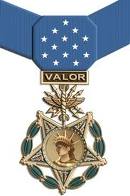
In our nation’s history, we have presented our highest military decoration, the Medal of Honor, nearly 3,500 times for actions above and beyond the call of duty. But this may be the first time that we can actually bear witness to a small part of those actions for ourselves. And today we honor the American in that video - the soldier who went back in - Captain William Swenson.
Swenson received the Medal of Honor for his courageous actions while serving as an Embedded Trainer and Mentor of the Afghan National Security Forces with Afghan Border Police Mentor Team, 1st Battalion, 32nd Infantry Regiment, 3rd Brigade Combat Team, 10th Mountain Division, during a lengthy battle with the Taliban in Kunar Province, Afghanistan on September 8, 2009.
Moments like this, Americans like Will, remind us what our country can be at its best - a nation of citizens who look out for one another; who meet our obligations to one another, not just when it’s easy, but when it’s hard. Especially when it’s hard. Will, you’re an example - to everyone in this city, to our whole country - of the professionalism and patriotism we should strive for - whether we wear the uniform or not.
It was only the second time in nearly half a century that the Medal of Honor has been awarded to two survivors of the same battle. Corporal Dakota Meyer who fought not far from Swenson, was presented the Medal of Honor two years ago.
President Obama told the story of Swenson's actions in battle that day.
I want to take you back to that September morning four years ago. It’s around sunrise. A column of Afghan soldiers and their American advisors are winding their way up a narrow trail towards a village to meet with elders. But just as the first soldier reaches the outskirts of the village, all hell breaks loose.
Almost instantly, three Marines and a Navy corpsman [CORE-man] at the front of the column are surrounded. Will and the soldiers in the center of the column are pinned down. Rocket-propelled grenade, mortar, and machine gun fire is pouring in from three sides.
As he returns fire, Will calls for air support. But his initial requests are denied - Will and his team are too close to the village. Then Will learns that his noncommissioned officer, Sergeant First Class Kenneth Westbrook, has been shot in the neck. So Will breaks across 50 meters of open space, bullets biting all around. Lying on his back, he presses a bandage to Kenneth’s wound with one hand and calls for a Medevac with the other, trying to keep his buddy calm.
By this time, the enemy has gotten even closer - just 20 or 30 meters away. Over the radio, they’re demanding the Americans surrender. Will stops treating Kenneth long enough to respond - by lobbing a grenade.
Finally, after more than an hour and a half of fighting, air support arrives. Will directs them to nearby targets. Then it’s time to move. Exposing himself again to enemy fire, Will helps carry Kenneth the length of more than two football fields, down steep terraces, to that helicopter. And then, in the moment captured by those cameras, Will leans in to say goodbye.
But more Americans - and more Afghans - are still out there. So Will does something incredible. He jumps behind the wheel of an unarmored Ford Ranger pickup truck. A Marine gets in the passenger seat. And they drive that truck - a vehicle designed for the highway - straight into the battle.
Twice, they pick up injured Afghan soldiers - bullets whizzing past them, slamming into the pickup truck. Twice they bring them back. When the truck gives out, they grab a Humvee. The Marine by Will’s side has no idea how they survived. But, he says, “by that time it didn’t matter. We [were] not leaving any soldiers behind.”
Finally, a helicopter spots those four missing Americans - hours after they were trapped in the opening ambush. So Will gets in another Humvee, with a crew that includes Dakota Meyer. And together, they drive. Past enemy fighters. Up through the valley. Exposed once more.
When they reach the village, Will jumps out - drawing even more fire, dodging even more bullets. But they reach those Americans, lying where they fell. Will and the others carry them out, one-by-one. They bring their fallen brothers home.


 Congressional Medal of Honor Society
 Congressional Medal of Honor Foundation
 Home of Heroes
 U.S Army Center of Military History
 U.S. Department of Defense
 The Pritzker Military Library

 Brings to life some of the rich stories that define America’s highest honor as it seeks to answer the broader question of what the Medal of Honor says about us as a nation. Read more...

 Subscribe in a reader