Saturday, February 22, 2025

President Obama to Award Medal of Honor


On March 18th, 2014, President Barack Obama will award 24 Army veterans the Medal of Honor for conspicuous gallantry. These veterans will receive the Medal of Honor in recognition of their valor during major combat operations in World War II, the Korean War and the Vietnam War. Each of these Soldiers’ bravery was previously recognized by award of the Distinguished Service Cross, the nation’s second highest military award; that award will be upgraded to the Medal of Honor in recognition of their gallantry, intrepidity and heroism above and beyond the call of duty.

In 2002, Congress, through the Defense Authorization Act, called for a review of Jewish American and Hispanic American veteran war records from WWII, the Korean War and the Vietnam War, to ensure those deserving the Medal of Honor were not denied because of prejudice.  During the review, records of several Soldiers of neither Jewish nor Hispanic descent were also found to display criteria worthy of the Medal of Honor.  The 2002 Act was amended to allow these Soldiers to be honored with the upgrade - in addition to the Jewish and Hispanic American Soldiers.

The 24 recipients of the Medal of Honor follow below.

PERSONAL BACKGROUND

The President will award the Medal of Honor to:

Specialist Four Santiago J. Erevia will receive the Medal of Honor for his courageous actions while serving as radio telephone operator in Company C, 1st Battalion (Airmobile), 501st Infantry, 101st Airborne Division (Airmobile) during search and clear mission near Tam Ky, Republic of Vietnam.

Staff Sergeant Melvin Morris will receive the Medal of Honor for his courageous actions while serving as Commander of a Strike Force drawn from Company D, 5th Special Forces Group (Airborne), 1st Special Forces, during combat operations against an armed enemy in the vicinity of Chi Lang, Republic of Vietnam on September 17, 1969.

Sergeant First Class Jose Rodela will receive the Medal of Honor for his courageous actions while serving as the company commander, Detachment B-36, Company A, 5th Special Forces Group (Airborne), 1st Special Forces during combat operations against an armed enemy in Phuoc Long Province, Republic of Vietnam on September 1, 1969.

The President will posthumously award the Medal of Honor to:

The following individuals distinguished themselves by acts of gallantry and intrepidity above and beyond the call of duty while serving during the Vietnam War

Sergeant Candelario Garcia will receive the Medal of Honor for his courageous actions while serving as an acting Team Leader for Company B, 1st Battalion, 2d Infantry, 1st Brigade,1st Infantry Division during combat operations against an armed enemy in Lai Khe, Republic of Vietnam on December 8, 1968.

Specialist Four Leonard L. Alvarado will receive the Medal of Honor posthumously for his courageous actions while serving as a Rifleman with Company D, 2d Battalion, 12th Cavalry, 1st Cavalry Division (Airmobile) during combat operations against an armed enemy in Phuoc Long Province, Republic of Vietnam on August 12, 1969.

Staff Sergeant Felix M. Conde-Falcon will receive the Medal of Honor posthumously for his courageous actions while serving as an acting Platoon Leader in Company D, 1st Battalion, 505th Infantry Regiment, 3d Brigade, 82d Airborne Division during combat operations against an armed enemy in Ap Tan Hoa, Republic of Vietnam on April 4, 1969.

Specialist Four Ardie R. Copas will receive the Medal of Honor posthumously for his courageous actions while serving as a Machinegunner in Company C, 1st Battalion (Mechanized), 5th Infantry Regiment, 25th Infantry Division during combat operations against an armed enemy near Ph Romeas Hek, Cambodia on May 12, 1970.

Specialist Four Jesus S. Duran will receive the Medal of Honor posthumously for his courageous actions while serving as an acting M-60 machinegunner in Company E, 2d Battalion, 5th Cavalry, 1st Cavalry Division (Airmobile) during combat operations against an armed enemy in the Republic of Vietnam on April 10, 1969.

The following individuals distinguished themselves by acts of gallantry and intrepidity above and beyond the call of duty while serving during the Korean War.

Corporal Joe R. Baldonado will receive the Medal of Honor posthumously for his courageous actions while serving as an acting machine gunner in 3d Squad, 2d Platoon, Company B, 187th Airborne Infantry Regiment during combat operations against an armed enemy in Kangdong, Korea on November 25, 1950.

Corporal Victor H. Espinoza will receive the Medal of Honor posthumously for his courageous actions while serving as an Acting Rifleman in Company A, 23d Infantry Regiment, 2d Infantry Division during combat operations against an armed enemy in Chorwon, Korea on August 1, 1952.

Sergeant Eduardo C. Gomez will receive the Medal of Honor posthumously for his courageous actions while serving with Company I, 8th Cavalry Regiment, 1st Cavalry Division during combat operations against an armed enemy in Tabu-dong, Korea on September 3, 1950.

Private First Class Leonard M. Kravitz will receive the Medal of Honor posthumously for his courageous actions while serving as an assistant machinegunner with Company M, 5th Infantry Regiment, 24th Infantry Division during combat operations against an armed enemy in Yangpyong, Korea on March 6 and 7, 1951.

Master Sergeant Juan E. Negron will receive the Medal of Honor posthumously for his courageous actions while serving as a member of Company L, 65th Infantry Regiment, 3d Infantry Division during combat operations against an armed enemy in Kalma-Eri, Korea on April 28, 1951.

Master Sergeant Mike C. Pena will receive the Medal of Honor posthumously for his courageous actions while serving as a member of Company F, 5th Cavalry Regiment, 1st Cavalry Division during combat operations against an armed enemy in Waegwan, Korea, on September 4, 1950.

Private Demensio Rivera will receive the Medal of Honor posthumously for his courageous actions while serving as an automatic rifleman with 2d Platoon, Company G, 7th Infantry Regiment, 3d Infantry Division during combat operations against an armed enemy in Changyong-ni, Korea on May 23, 1951.

Private Miguel A. Vera will receive the Medal of Honor posthumously for his courageous actions while serving as an automatic rifleman with Company F, 38th Infantry Regiment, 2d Infantry Division in Chorwon, Korea, on September 21, 1952.

Sergeant Jack Weinstein will receive the Medal of Honor posthumously for his courageous actions while leading 1st Platoon, Company G, 21st Infantry Regiment, 24th Infantry Division in Kumsong, Korea on October 19, 1951.

The following individuals distinguished themselves by acts of gallantry and intrepidity above and beyond the call of duty while serving during World War II.

Private Pedro Cano will receive the Medal of Honor posthumously for his courageous actions while serving with Company C, 8th Infantry Regiment, 4th Infantry Division during combat operations against an armed enemy in Schevenhutte, Germany on December 3, 1944.

Private Joe Gandara will receive the Medal of Honor posthumously for his courageous actions while serving with Company D, 2d Battalion, 507th Parachute Infantry Regiment, 17th Airborne Division during combat operations against an armed enemy in Amfreville, France on June 9, 1944.

Private First Class Salvador J. Lara will receive the Medal of Honor posthumously for his courageous actions while serving as the Squad Leader of a rifle squad with 2d Platoon, Company L, 180th Infantry, 45th Infantry Division during combat operations against an armed enemy in Aprilia, Italy on May 27 and 28, 1944.

Sergeant William F. Leonard will receive the Medal of Honor posthumously for his courageous actions while serving as a Squad Leader in Company C, 30th Infantry Regiment, 3d Infantry Division during combat operations against an armed enemy near St. Die, France on November 7, 1944.

Staff Sergeant Manuel V. Mendoza will receive the Medal of Honor posthumously for his courageous actions while serving as a Platoon Sergeant with Company B, 350th Infantry, 88th Infantry Division during combat operations against an armed enemy on Mt. Battaglia, Italy on October 4, 1944.

Sergeant Alfred B. Nietzel will receive the Medal of Honor posthumously for his courageous actions while serving as a section leader for Company H, 16th Infantry Regiment, 1st Infantry Division during combat operations against an armed enemy in Heistern, Germany on November 18, 1944.

First Lieutenant Donald K. Schwab will receive the Medal of Honor posthumously for his courageous actions while serving as the Commander of Company E, 15th Infantry Regiment, 3d Infantry Division, during combat operations against an armed enemy near Lure, France on September 17, 1944.

ADDITIONAL INFORMATION

THE MEDAL OF HONOR:

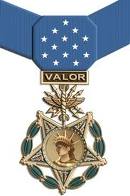
The Medal of Honor is awarded to members of the Armed Forces who distinguishes themselves conspicuously by gallantry above and beyond the call of duty while:

• engaged in an action against an enemy of the United States;
• engaged in military operations involving conflict with an opposing foreign force; or
• serving with friendly foreign forces engaged in an arm
Friday, February 21, 2025

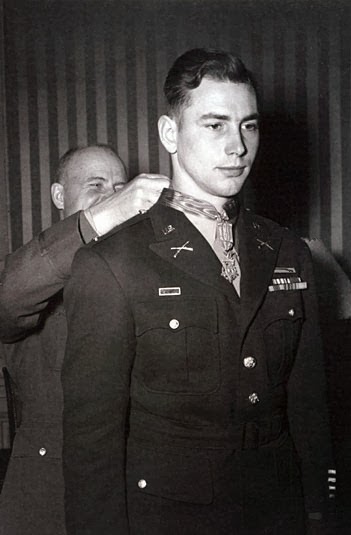
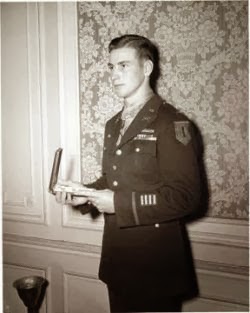
Walter Ehlers World War II hero of D-Day, Medal of Honor recipient, dies at 92


This is the story of seven June days in 1944 in the life of Walter D. Ehlers.
For his bravery, he would receive the nation’s highest military honor.
To understand the impact of those seven days -- June 4 to June 10 -- this is his story.

EHLERS
PRESENTED
MEDAL OF HONOR
DECEMBER 19, 2024
Ehlers, born in Manhattan, Kan., joined the Army in 1940 with his brother Roland.

Four years later, they were both non-commissioned officers and veterans of two amphibious landings - North Africa and Sicily. After the fighting in Sicily ended, their unit, the 1st Infantry Division, was sent to Dorchester, England, about 35 miles from Weymouth.

Ehlers, then a non-commissioned officer, said, “We had more amphibious training.”

The reason for the six-months of rigorous training was the arrival of so many replacements for men who had been wounded or killed in the fighting in those two campaigns. “They had ever seen combat before. We had to train them” for what would be the invasion of Normandy.

Along the southern coast of England and Wales, amphibious training centers were established. The major base was at Slapton Sands, south of Dartmouth. Its topography resembled Normandy’s coastline.

During this time, “I was separated from my brother. I went to L Company and he stayed in K.” The reason for the separation was to spare families the loss of two or more brothers in a single incident.

The War and Navy Departments were reacting to the shock over the news of one Waterloo, Iowa, family’s loss in the Pacific.

In 1942, five brothers - the Sullivans - died when the light cruiser Juneau they were serving aboard was sunk by a Japanese torpedo.

On the night of June 4, “we were on LCIs, heading for the assault on Omaha Beach. The 116th Infantry Regiment was attached to us.”
WALTER EHLERS  WAS PRESENTED  
THE MEDAL OF HONOR
ON DECEMBER ,1944

Aboard the crowded transport, the “soldiers were scared; their leaders were scared” not knowing what would be happening in a matter of hours, Ehlers said.

The delay of a day because of bad weather did not help to allay the soldiers’ fears.

Walter’s older brother would be in the second wave. “The first wave got pinned down” and soon Walter and his men “joined the chaos on the beach. We didn't have any exact orders as to who we were to be with,” but “we landed where we should be.”

His men followed the newly promoted staff sergeant into the water when the Higgins boat they were in grounded on a sandbar.

“We were about 100 yards out. I was up to my neck in water. For some, it was over their heads.” But, Ehlers said, they all had their weapons.

It was clear to Ehlers that they had to keep moving to stay alive. The Germans “were firing all around us. We’d drown if we stayed in the water. We’d be dead if we stayed on the beach.”

The bulk of the 16th Infantry Regiment and the 116th were to the east on Omaha Beach.

“All we did was follow the beach master, telling us to follow the path.” The path was blocked by barbed wire. “Two Bangalore torpedo-men said they were pinned down.”

Ehlers and his soldiers were firing toward the bluff “trying to move the Germans out of the way."

One of the Bangalore torpedo-men was wounded before he got off his round at the wire, but the second one hit the obstruction, blasting it clear.

Now on the top of the bluff, Ehlers saw an America soldiers trying to force a satchel charge into a German pillbox. The soldier was killed before he could get to the Germans.

Ehlers then “immediately got into the trenches” that connected the German positions. Four Germans surrendered and the rest fled.

When night fell, he slept by the hedgerows.

“I got all 12 men off the beach without a casualty.” Ehlers said 50 percent of the first wave became casualties, as did 30 percent in the second wave.

His older brother died in the second wave attack. “I just think God was with us.”

For his actions on June 6, Walter would receive the Bronze Star with Valor Device.

The next evening, Ehlers and his platoon from E Company pulled back during a German counterattack.

The American lines ran -- zig-zag -- he told author Flint Whitlock in his book, “Fighting First.” To avoid shooting U.S. soldiers, he withdrew.

Later, Ehlers and his men were on a night patrol when they captured several German soldiers. In a satchel that one of the Germans had dropped were maps of the second and third lines of defense away from the beaches near Goville.

They took the satchel back to battalion headquarters for closer examination.

With daylight, soldiers from Ehlers regiment pressed the edges of those lines that ran through the hedgerows. Although his squad was in the lead crossing an open field the morning of June 9, the unit to his left began taking fire.

He yelled: “Come on guys we got to get to the hedgerow to get some cover.” This was a situation that could not remain static as Germans began firing from another hedgerow.

“I went down to the hedgerow where I heard the machine gun” and came upon a patrol on the other side of the hedgerow. “I shot all four before they could shoot me.” Ehlers was firing from a small opening in the middle of the hedgerow.

The .30 caliber machine gun was still firing. The three Germans “couldn't see me” as he continued crawling along the hedgerow.

He took out the first machine gun next with his rifle. “I was exposed but they didn't see me.” Ehlers then opened up on a second machine gun next across the square field and eliminated it. “They were exposed.”

After hearing more noise, Ehlers scrambled up an embankment. There he found two mortar positions, “protected by the crossfire of two machine-guns,” Medal of Honor’s citation reads.

His squad was moving up with him. “I had the men fix bayonets.” The Germans “became horrified when they saw the bayonets. We shot over 10 of them.”

The Germans made no effort at surrendering.

The squad continued moving down the hedgerow toward another mortar position and took it out.

Ehlers was covered by the squad, advancing on the third machine gun nest. “When he was almost on top of the gun, he leaped to his feet and, although greatly outnumbered, he knocked out the position single-handed,” the citation reads.

The assaults on the German defenses continued into the next day when Ehlers squad moved into one of the rectangular-shaped fields formed by the hedgerow.

“We didn’t know the Germans were there,” obscured but in a rough “U” formation. Ehlers and his men were still advancing when their company commander “passed up the word to withdraw.”

Ehlers stood “up firing in a semicircle and the automatic rifleman saw what I was doing and supported me. I saw three guys setting up a machine gun nest. I got hit in the back and shot the guy in the hedgerow.”

The soldier with the Browning Automatic Rifle was also shot in the back. “I got the wounded automatic rifleman” and “then I went to get the weapon.”

As Ehlers told author Larry Smith in his book “Beyond Glory,” “the bullet hit my rib it went into my pack, hit a bar of soap, which turned it straight through the back of the shovel. It went through the edge of my mother’s picture.”

He had his wound dressed. He refused to be evacuated.

BY Command Sergeant Major Jimmie W. Spencer, Association of the United States Army


WALTER EHLERS MEDAL OF HONOR CITATION

For conspicuous gallantry and intrepidity at the risk of his life above and beyond call of duty on 9-10 June 1944, near Goville, France. S/Sgt. Ehlers, always acting as the spearhead of the attack, repeatedly led his men against heavily defended enemy strong points exposing himself to deadly hostile fire whenever the situation required heroic and courageous leadership. Without waiting for an order, S/Sgt. Ehlers, far ahead of his men, led his squad against a strongly defended enemy strong point, personally killing 4 of an enemy patrol who attacked him en route. Then crawling forward under withering machine-gun fire, he pounced upon the gun-crew and put it out of action. Turning his attention to 2 mortars protected by the crossfire of 2 machine-guns, S/Sgt. Ehlers led his men through this hail of bullets to kill or put to flight the enemy of the mortar section, killing 3 men himself. After mopping up the mortar positions, he again advanced on a machine-gun, his progress effectively covered by his squad. When he was almost on top of the gun he leaped to his feet and, although greatly outnumbered, he knocked out the position single-handed. The next day, having advanced deep into enemy territory, the platoon of which S/Sgt. Ehlers was a member, finding itself in an untenable position as the enemy brought increased mortar, machine-gun, and small arms fire to bear on it, was ordered to withdraw. S/Sgt. Ehlers, after his squad had covered the withdrawal of the remainder of the platoon, stood up and by continuous fire at the semicircle of enemy placements, diverted the bulk of the heavy hostile fire on himself, thus permitting the members of his own squad to withdraw. At this point, though wounded himself, he carried his wounded automatic rifleman to safety and then returned fearlessly over the shell-swept field to retrieve the automatic rifle which he was unable to carry previously. After having his wound treated, he refused to be evacuated, and returned to lead his squad. The intrepid leadership, indomitable courage, and fearless aggressiveness displayed by S/Sgt. Ehlers in the face of overwhelming enemy forces serve as an inspiration to others.

EDITOR'S NOTES:
At the 50th. Anniversary of D-Day, June 6,1994, held at Normandy, presided over by President Clinton, Ehlers was featured speaker representing the United States Army.

Today there are 75 living recipients of the Medal of Honor. 7 from World War II, 10 from the Korean war, 52 from the Vietnam war and 6 from the war in Afghanistan.

Friday, February 14, 2025

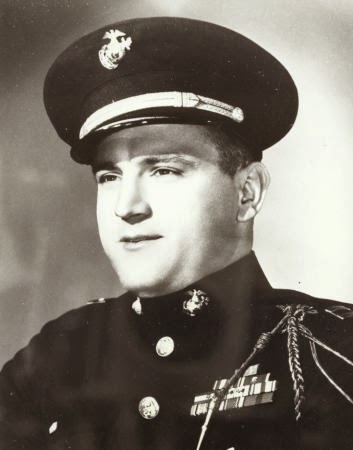
Marine hero of World War II Captain Carlton R. Rouh Medal of Honor recipient remembered for heroism at the Battle of Peleliu


Falling on a grenade, living to tell the tale ...

Captain Carlton R. Rouh, received the Medal of Honor for falling on a grenade and saving fellow Marines. Rouh was able to survive the blast.

BARSTOW, Calif. - Few acts of heroism and selflessness can match jumping upon a live hand grenade in combat.

Designed to kill or injure in a large area, absorbing the entire blast of a grenade with one’s own body means almost certain death. It is for this reason that several service members throughout history have received the Medal of Honor for this ultimate act of self-sacrifice.

Carlton R. Rouh however, is one of very few men who have fallen on a grenade and lived to tell the tale.

Born May 11, 2025 in Lindenwold, N.J., Rouh enlisted in the Marine Corps, January 1942, shortly after the outbreak of World War II.

Following basic training, Pvt. Rouh was sent to the pacific theater for combat duty.

Rouh received the Silver Star Medal during the Battle of Guadalcanal for carrying wounded men out of enemy fire, until he himself was wounded. In addition to this, Rouh was awarded a battlefield commission to second lieutenant for his outstanding leadership and initiative in combat.

As an officer, Rouh was put in command of a weapons platoon during the New Britain Campaign.

Rouh was promoted to first lieutenant prior to the Battle of Peleliu where he performed actions above and beyond the call of duty.

On September 15, 1944, during the Battle of Peleliu, Rouh was severely wounded by Japanese fire. Two of his fellow Marines managed to pull him away to a safer location and began administering first aid.

While receiving first aid, Rouh and his men came under fierce Japanese fire and grenade assault, with one grenade landing in their midst. Despite his injuries, Rouh shoved his two comrades aside and threw his body over the grenade. Rouh’s body absorbed the entire blast, leaving his two Marines uninjured.

Still conscious, Rouh heard the continuing firefight, and was eventually able to be evacuated. For his selfless actions, Rouh received the Medal of Honor.

Following his evacuation, Rouh was hospitalized to recover from his grievous wounds. Upon his retirement from active duty, Rouh was promoted to captain.

Rouh passed away December 8, 1977, but his actions and the actions of service members like him continue to inspire people to this day.

Medal of Honor Citation

For conspicuous gallantry and intrepidity above and beyond the call of duty while attached to the 1st Battalion, 5th Marines, 1st Marine Division, during action against enemy Japanese forces on Peleliu Island, Palau group, 15 September 1944. Before permitting his men to use an enemy dugout as a position for an 81-mm. mortar observation post, 1st Lt. Rouh made a personal reconnaissance of the pillbox and, upon entering, was severely wounded by Japanese rifle fire from within. Emerging from the dugout, he was immediately assisted by 2 marines to a less exposed area but, while receiving first aid, was further endangered by an enemy grenade which was thrown into their midst. Quick to act in spite of his weakened condition, he lurched to a crouching position and thrust both men aside, placing his own body between them and the grenade and taking the full blast of the explosion himself. His exceptional spirit of loyalty and self-sacrifice in the face of almost certain death reflects the highest credit upon 1st Lt. Rouh and the U.S. Naval Service.

BY LANCE CPL GARRETT WHITE,  DVIDS MARINE CORPS LOGISTICS BARSTOW

ShareThis